

What Is Anterior Ankle Impingement?
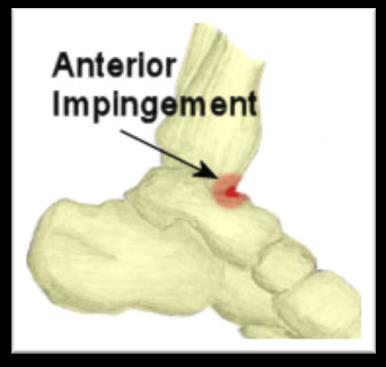
What is Anterior Ankle Impingement?
“Impingement” of the ankle refers to pain and dysfunction at the ankle which can occur at the front (anterior) or at the back of the ankle (posterior). ‘’Impingement” means “to hit against” or “to come in contact with” and in medical terms, usually means the soft tissue (muscles, tendons etc) are being squashed by bony structures. Movement is no longer optimal.
Anterior ankle impingement is felt over the front of the ankle joint, more commonly towards the outside below the fibula.
Dance forces the ankle into deep end range positions where the ends of the Tibia and fubula (Shin region) can come into contact with the bones of the foot and cause irritation of the soft tissues and capsule of the ankle in this area.
Anterior Ankle Impingement will occur in full dorsiflexion such as in a deep demi plié or repeated landing from jumps.
Posterior impingement however is felt at the back of the ankle normally in movements such as tendue, demi plie and en pointe.
Why does it occur?
In the case of an anterior impingement, it is common to find the irritation of the tissues as a result of non-optimal gliding and movement of the ankle joint (tibia and fibula upon the talus). This reduction in ‘glide and slide’ of the joint causes undue connection and irritation of the soft tissues upon the bony joint. The tissues are being ‘squashed’ against a blocked ankle. In order for the joint to glide well, the muscles at the back of the calf region (FHL, FHB, Tibialis Posterior, Gastroc and Soleus) need to be loose, elastic and functioning well. If any of these muscles become tight and overused, they will impact upon the movement at the ankle joint and prevent a smooth backwards glide in dorsi flexion.
Previous ankle inversion sprains and resulting scar tissue can also lead to impingement in this area.
Sub optimal ankle bio mechanics can also be a result of reduced hip, pelvis and leg control.
A full lower limb assessment is therefore required.
Symptoms
Anterior Impingement felt as ankle pain or blocking at the front of the ankle that increases on full dorsiflexion (bend).
If there is any development of osteophytes (bony spurs) or a small fracture, the pain can be quite sharp and localised to a small area. Pain can be localised to touch.
When impingement arises from ligament irritation, pain and tissue thickening are often felt in front and slightly to the side of the ankle. Tenderness and swelling may also be seen over the front of the ankle. There is often a sense of blocking and an inability to reach full plié depth.
Diagnosis
Diagnosis can almost be made by the individual. Assessment of why it has occurred however will need to be done by a trained physio/ clinician. Pinpointing the primary cause of the movement dysfunction is of paramount importance for treatment and corrective rehab thereafter.
Treatment
An initial reduction in symptoms can often be achieved with soft tissue releases into the back of the calf region and underside of the foot. This can be combined with taping or even orthotics to help with movement control in the early stages of rehab.
A thorough and holistic assessment of movement and technique however is essential in discovering the reason for muscular overuse and dysfunction.
Discovering the reason for muscular overuse is imperative to allow the muscles to function normally.
Is it due to a compressed foot? Poor control in the hips and pelvis? Rib dysfunction? Non optimal core or turnout use?
If ………………treatment is not 100% successful then a steroid (cortisone) injection into the painful area may be required. Steroids are strong anti-inflammatory medications. A steroid injection can help relieve irritation and swelling in the soft tissues that are being pinched.
If nonsurgical treatments do not work, surgery may be recommended. The type of surgery will vary depending on the location and cause of ankle impingement. This will often comprise of arthroscopy and a ‘clean up’ of the tissues and any scarring.
Recovery
Recovery can be rapid if a diagnosis is made early before there is too much tissue damage and thickening. Early technique correction and self treatment can mean no time away from dance.
If steroid injection is required then a break of up to 6 weeks may be advised for the area to heal effectively.
In Summary
Warning signs that you may be at risk of developing Anterior impingement include: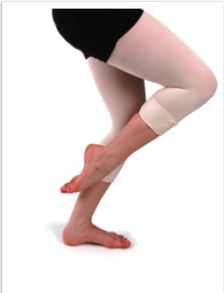
- Feeling restricted in your plie depth
- Finding it hard to lower your heels when jumping
- Deep tension in the foot in front of the heel bone
- Stiffness in your arch
- Inability to absorb shock when landing jumps
- Discomfort around the front of the ankle joint
If you have any further questions or require assistance with your dance rehab we will be very happy to guide you further (www.perfectformphysio.com)


